Welcome to our introductory workshop on Retrieval-Augmented Generation (RAG)! This session begins with a foundational overview of core RAG concepts—like chunking, embeddings, and similarity search—before applying those principles in a practical live demo. The demo showcases a custom TypeScript project with a unique hybrid architecture, letting you seamlessly switch between Google Gemini for high-performance multimodal RAG (handling images, audio, and PDFs) and Ollama for 100% local, privacy-focused text RAG. Access the code repository at https://amr-salem.com/projects/multimodal-hybrid-rag, and subscribe for more Tech, AI, and QA content!
More talks
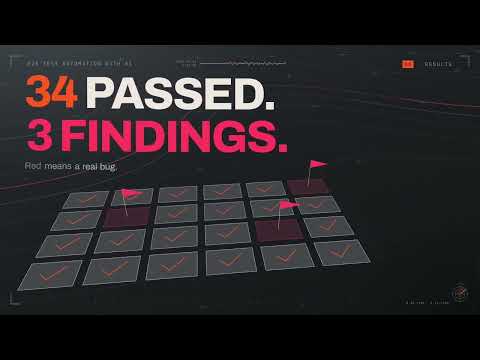
Test You Software Like a Pro with AI Agents
Having an ecosystem run by agents that test your application is a no brainer. The question is how effective, reliable, and accurate it is. In my recent blog below, I have described, in a nutshell, the approach I have used to get two agents responsible for test design and automation implementation, not relying only on the story's textual context, but ensuring the generated output is based on complete awareness of the system, architecture, and limitations.

Astur — One Script to Test Any Mobile App (No Appium, No WebDriver)
One script runs across Android, iOS, Flutter and React Native — native or hybrid, it doesn't matter. No Appium. No WebDriver. No proxy in between. Astur drives the device directly, so it's faster and there are fewer moving parts to break.

One Recorder, Every Mobile App — Astur Codegen (Android, iOS, RN, Flutter)
Astur is an open-source toolkit for mobile UI test automation — write tests like you would with Playwright, no Appium server. In this demo I walk through codegen: point it at a running app, tap through a flow, and Astur generates the test for you.

